
Guest WiFi Analytics: The Foot-Traffic Data Your POS Can't See
Ask a business owner how many customers they had yesterday and they'll quote their POS: 214 transactions. But that number hides a bigger one. How many people…
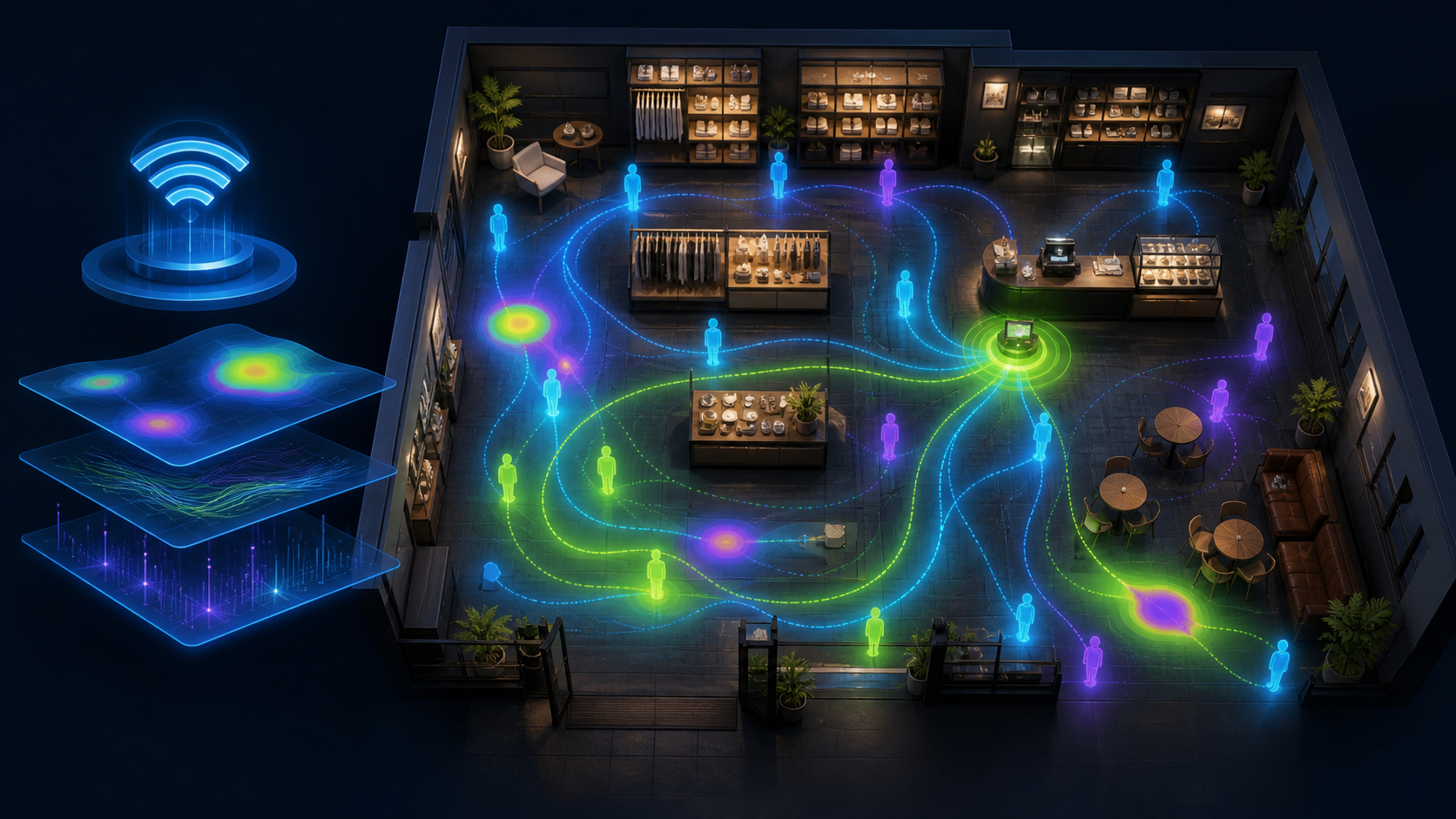
Ask a business owner how many customers they had yesterday and they'll quote their POS: 214 transactions. But that number hides a bigger one. How many people walked in? How many browsed and left without buying? How many were repeat visitors? How long did they stay?
Online businesses answer these questions instantly — every e-commerce site knows its traffic, bounce rate, and returning-visitor percentage down to the decimal. Physical businesses have mostly flown blind. Guest WiFi analytics close that gap: because most visitors connect to your WiFi, the connection data becomes a live census of your actual foot traffic. Here's what that data reveals and how businesses on UniFi networks put it to work with NerdPortal.
The Blind Spot in Your Current Numbers
Your point-of-sale system records outcomes, not opportunities. It can't tell you that Saturday brought 600 people through the door and only 380 bought — a 63% conversion rate you didn't know you had, and couldn't improve because you couldn't see it. It can't distinguish a first-time visitor from your hundredth-visit regular unless they're in a loyalty program. And it says nothing about the browsers, the meeters, the price-checkers, and the "just looking" crowd who represent your nearest-term growth.
Door counters help but count everything — staff, deliveries, the same person three times. Camera analytics are expensive and raise privacy questions. WiFi connection data, gathered through a transparent opt-in portal, hits the sweet spot: meaningful coverage of real visitors, individually distinguishable as new or returning, timestamped, and tied to a contact you can actually market to.
What NerdPortal's Analytics Actually Show You
When guests connect through a NerdPortal-powered portal on your UniFi network, every authorization becomes a data point in a real-time dashboard:
Live visitor tracking. Who's connected right now, and how today compares to a normal day — visible from anywhere, useful for everything from staffing calls to verifying that an event is actually drawing people.
New vs. returning guests. The single most underrated retail metric. Returning share is a direct read on customer loyalty and experience: if it climbs after you launch a loyalty email, your campaigns work; if it sags after a menu change or a manager change, you have an early warning no survey would surface for months.
Peak usage times. Connection volume by hour and day reveals your true traffic curve — including the browse-heavy periods your transaction log understates. Businesses routinely discover their busiest foot-traffic hour isn't their busiest sales hour, which is either a staffing problem or a merchandising opportunity.
Conversion rate metrics. Portal views versus completed signups tell you how compelling your splash page is; pair connection counts with POS transactions and you get a store-level visitor-to-buyer conversion rate you can finally manage against.
Per-site comparisons. Multi-location operators see every site side by side: which locations are growing, which lag on returning-guest rate, where traffic patterns differ. Consolidated across your whole UniFi estate in one dashboard, with export-ready reports (CSV/JSON) and API access to pipe metrics into your own BI stack.
Turning the Numbers Into Decisions
Analytics only matter if they change what you do Monday morning. Real-world plays:
Staff to traffic, not to habit. A cafe discovers via connection data that Sunday 2–4 p.m. is its second-busiest browsing window — while it runs a skeleton crew. One schedule tweak later, wait times drop during a period the POS never flagged as busy.
Turn slow windows into campaigns. The dashboard shows Tuesdays cratering after 6 p.m.? Your WiFi-captured email list is the zero-cost lever: a Tuesday-evening offer sent to guests who've visited before, with a trackable code to measure redemptions.
Diagnose retention before it's a crisis. A gym's Saturday drop-ins return at three times the rate of weekday drop-ins. That's not trivia — it tells the sales team when trial visitors are actually convertible and refocuses follow-up effort where it works.
Validate changes with a before/after. New layout, new hours, new signage, new manager — watch new-visitor volume and returning share across the change. You get e-commerce-style A/B discipline for a physical space.
Prove it to stakeholders. Franchisors, landlords negotiating percentage rent, partners, lenders — real foot-traffic data with month-over-month trends is credibility your gut feel never had.
Why This Beats Standalone Analytics Hardware
Dedicated people-counting systems exist, but they add cost, hardware, and a separate silo. The WiFi-portal approach has structural advantages: it rides on the UniFi network you already own (no extra devices); every data point is opt-in and disclosed, collected through a branded portal with terms acceptance rather than passive tracking — cleaner both ethically and legally, with privacy-conscious handling, encryption, and automatic retention built into NerdPortal; and, decisively, every analytics record is also a marketing contact. A door counter tells you 600 people came in. NerdPortal tells you that — and gives you 450 email addresses to bring them back. Insight and audience in one system, from $29/month.
The honest caveat: WiFi analytics sample visitors who connect, not literally everyone. That's fine — a consistent, high-coverage sample tracked over time is exactly what trend decisions need, and connection rates are strong wherever the portal experience is fast and the WiFi is good.
Good Data Requires Good Coverage
One prerequisite: guests can't connect to WiFi that doesn't reach them. Dead zones don't just frustrate customers — they silently bias your data by undercounting whole sections of your space. If coverage or capacity is shaky, fix the radio layer first. The UniFi Nerds perform professional WiFi site surveys and UniFi installations nationwide — the same team behind NerdPortal — so the network your analytics depend on is actually measuring the whole room.
Frequently Asked Questions
Is this tracking people without their knowledge? No. NerdPortal's data comes from guests who actively connect through a disclosed, terms-accepted portal — opt-in by design, encrypted, and governed by automatic retention policies.
How is this different from UniFi's own dashboard? UniFi reports on the network (clients, throughput, AP health). NerdPortal reports on the business — identified guests, return behavior, capture conversion, and cross-site comparisons — and ties each record to a marketing contact.
Can I get the data out? Yes: CSV and JSON exports on all paid tiers, with API access on Pro (limited) and Enterprise (full) for CRM and BI integration.
How long before the data becomes useful? Live numbers appear on day one, but the real value starts around week three or four, when you have enough history to see weekly rhythm — and it compounds from there. Month-over-month comparisons, seasonal curves, and campaign before/afters all get sharper as the baseline grows, which is an argument for starting the clock now rather than after the next busy season.
Can staff see the dashboard too? That's your call, but many operators put the live view on a back-office screen. When a shift lead can see today's traffic against a normal day, staffing calls, prep decisions, and break timing all get quietly better — analytics working at the hourly level, not just the monthly report.
See Your Business the Way E-Commerce Sees Theirs
You've been running a store with the lights half off. Start a free 14-day NerdPortal trial — connect your UniFi controller in minutes and watch your real traffic curve appear by the end of the week.
NerdPortal is built by The UniFi Nerds, the nation's leading UniFi installation and managed services company.